

Common Tractor Problems and How to Fix Them
Published By Tafe corporate
September 04, 2026
Read Time: 5 mins
Tractor problems don't happen on a schedule. They usually happen right when the weather is perfect, and the work is piling up, and a mechanical breakdown means both lost time and lost money.
Most tractor issues, however, aren't catastrophic; they are often simple mechanical failures that you can identify and fix yourself if you know what to look for.
Why Regular Tractor Servicing is Important for Farmers.
Before we get into the how-to-fix part, let’s talk about why we want to avoid these tractor problems in the first place. Think of regular tractor maintenance as an investment.
-
First, it’s all about less downtime. When you’re chasing a weather window, you don't have time for a machine that won't start. Regular tractor servicing means you find the frayed belt before it breaks down.
-
Second, it leads to significantly lower repair costs. A few dollars for a new filter today is a lot cheaper than a multi-thousand-dollar engine rebuild next month.
-
Finally, it simply ensures better tractor life. A well-oiled machine can easily serve two generations of farmers if it's treated with respect.
Engine Starting Problems in Your Tractor
The most common tractor problem is an engine that refuses to turn over. When this happens, check these three areas first:
-
If your engine won't turn over, start with the most obvious: a weak battery. Tractors live in harsh environments. Dust, vibration, and extreme temperatures can drain a battery or corrode the terminals. Clean the terminals and ensure the cables are tight.
-
If the battery is fine but the engine still won't start, check the fuel supply. Diesel engines are notoriously picky about air in the lines or clogged fuel filters. If you’ve run the tank low, you may need to bleed the air out of the fuel lines.
-
Lastly, if you hear a clicking sound, you’re likely looking at a starter motor problem. Sometimes a gentle tap with a wrench can get you home, but a clicking starter usually means it’s time for a replacement.
Tractor Overheating Problems
Tractors are built to work hard, but everything has a breaking point. If your temperature gauge starts climbing toward the red zone, don't ignore it. Overheating can warp engine heads and ruin gaskets.
Low Coolant
Check your coolant levels every morning. If the level is consistently low, you likely have a pinhole leak in a hose or a faulty radiator cap.
Dirty Radiator
Chaff, dust, and seeds usually clog up those cooling fins. If air can't move through the radiator, the engine can't shed heat. A blast of compressed air or a gentle wash with a hose (never use a high-pressure power washer on those delicate fins!) usually does the trick.
Working Too Long in High Heat
Sometimes, the environment is just too much. If you're pulling a heavy plow in 100°F (38°C) weather, your tractor is going to struggle. Take breaks during the hottest part of the day; it's better for the machine and better for you. How you run the machine in the heat matters too — these simple habits on how to increase tractor fuel efficiency cut diesel waste without any new equipment.
Hydraulic System Problems in Your Tractor
Your hydraulics are the muscles of your machine. When they get sluggish, your productivity drops.
Slow Lifting
If your three-point hitch or loader moves slowly, check your hydraulic fluid level first. If the fluid looks milky, it’s contaminated with water and needs to be changed. If the levels are fine, you might have a clogged suction filter starving the pump.
Hydraulic Leaks and Damaged Seals
Hydraulic systems operate under incredible pressure. Always keep an eye out for wet spots on hoses or around cylinders. If you see a leak, don't use your hand to find it, as high-pressure fluid can actually penetrate your skin. Use a piece of cardboard instead.
Transmission and Clutch Problems
If your tractor feels like it’s fighting you when you try to change speed, the transmission is trying to tell you something. Hard gear shifting is often a sign of low transmission fluid or a clutch that isn't fully disengaging.
Clutch slipping is another common issue, especially on older utility models. If the engine revs up but the tractor doesn't speed up accordingly, your clutch disc is likely worn out. You might also notice unusual noise and vibration. While some vibration is normal in a big diesel, a new grinding or rattling sound usually points to a bearing that’s about to go.
PTO, Tire, and Steering Problems
-
The PTO (Power Take-Off) is what makes a tractor useful. If the PTO isn't engaging, it’s often an electrical solenoid or a mechanical linkage that’s stuck. Check the safety switches too, as many tractors won't engage the PTO if the seat sensor or brake isn't in the right position.
-
Regarding tires, keep an eye out for uneven wear. If one side is balder than the other, your alignment is off.
-
On the steering side, a poor steering response or loose feel is often just a matter of greasing the tie-rod ends or tightening the steering box.
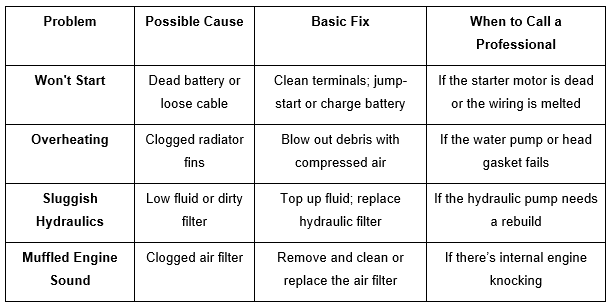
Quick Fixes Farmers Can Try First
When to Call a Professional Service Expert
While many tractor problems are simple, some require specialized tools and knowledge. If you're dealing with internal engine issues, complex transmission splitting, or modern electronic ECU problems, call the experts — this is where a strong tractor after-sales support network makes all the difference.
If you want to avoid many of these issues from the start, choosing a rugged, reliable brand is key. TAFE Tractors has built a massive international reputation precisely because their machines are designed to be "user-serviceable" and incredibly tough.
Keep your fluids clean, your radiator clear, and your battery charged. A little attention today prevents a massive repair bill tomorrow!